▪ INDEXP/004
▪ YEARMay 2026 · Delivered
▪ CONTEXTIndustry · Hot Mill
▪ STATUSIn Service

Hot Mill
Roller Trough.

▪ THE BRIEF
A steel mill shapes metal by squeezing red-hot bars through a series of rollers — like a pasta machine, but at 1,800°F and production pace. Between each pair of rollers, the bar travels through a guide channel called a trough. The old design used fixed steel plates where the bar first lands, and the bar hammered them thousands of times a day until they failed — shutting the whole line down before the production run was supposed to end. Redesign the trough so it lasts years without an unplanned stop.
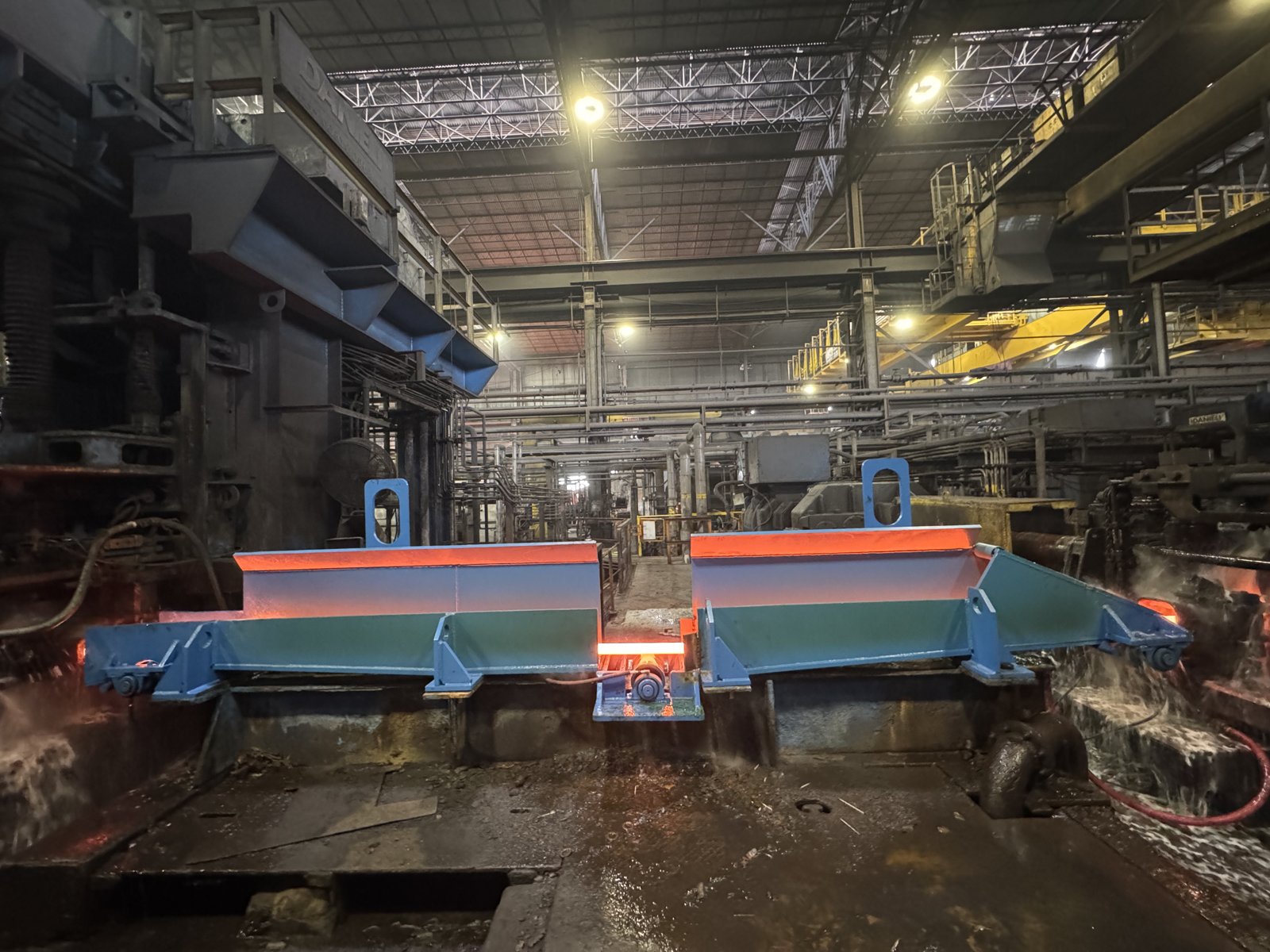
FIG. 01 · The trough in service Water-cooled roller trough assembly on a hot mill line, with red-hot steel bar glowing mid-transit through the gap between the two trough sections.

The plates wear out before the job is done.

Slidingfull bar impact on stationary plate every pass
No coolingwear plate absorbs all radiant and contact heat
Early exitplates worn before campaign end, forced changeout
Downtimeeach cobble risks permanent trough deformation

Runs the full campaign. No unplanned stops.

Rollingimpact converted to rotation — wear distributed over full roll face
Cooledinternal water circuit extracts heat continuously from each roll
Full lifedesigned to run a complete campaign without intervention
Survives cobblestructure sized for multi-ton folded bar without permanent set
3
▪ Water-cooled rolls per trough
1,800°F
▪ Approx. bar temp at transit
Longer lasting
▪ Full campaign without unplanned maintenance stops
1-hook lift
▪ Crane-liftable for fast line changeovers
§ 01 · Operating environment What the trough actually lives in

Heat, scale, and water — all at once

The trough sits in a continuous stream of radiant heat from bars passing at 1,600–2,000°F, descale spray that hits the structure every cycle, and iron-oxide scale — a hard, glassy flake that sheds off the bar at speed and sandblasts anything in its path. The structure has to survive all three simultaneously for years between planned rebuilds.

Impact loads beyond the static math

The design loads aren't the weight of the trough or even the weight of the bar — they're the force of a bar arriving slightly off-line at rolling speed, and the worst-case cobble: a multi-ton mass of folded hot steel piling up inside the structure. The trough has to absorb that without permanent deformation so it can go straight back into the line.
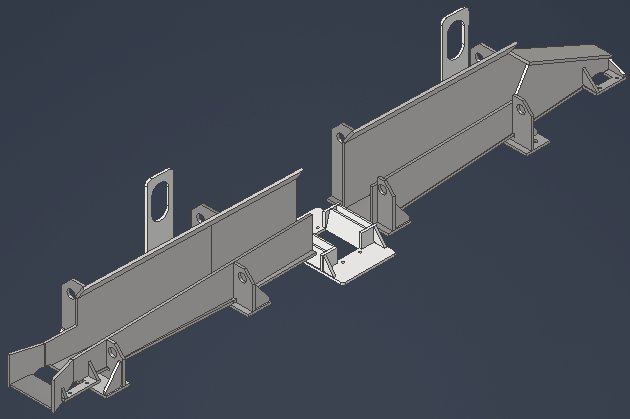
FIG. 02 · Overall assembly CAD isometric view of the roller trough assembly showing the two trough sections with integrated lifting lugs and the central transition piece that houses the water-cooled rolls.
§ 02 · Rolls instead of plates Why the contact geometry matters

The problem with fixed plates

A fixed wear plate takes the full impact of the bar at the same spot every single pass — thousands of times a day. The energy doesn't distribute; it concentrates. The plate heats up, the contact zone work-hardens and erodes, and eventually the plate wears through before the campaign ends, forcing an unplanned shutdown.

What a roll does differently

A rotating roll converts that stationary impact into rolling contact. The bar still lands on it — but instead of one spot absorbing everything, the load spreads across the entire roll face as it turns. No single area accumulates damage at the same rate. The same energy input produces dramatically less wear per unit of surface area. And, rolls can easily be replaced upon wearing.

§ 03 · Why the rolls need water The thermal problem rolling contact alone doesn't solve

Steel softens when it gets hot enough

Rolling contact reduces wear, but it doesn't eliminate heat. Each bar deposits a thermal pulse into the roll on contact — and if the roll body climbs above its tempering range, the surface steel softens, loses its hardness, and wears rapidly anyway. You've solved the mechanical problem and created a thermal one.

Internal water flow as a heat sink

Running cooling water through the core of each roll extracts that heat continuously, keeping the roll body well below the temperature where its mechanical properties degrade. The roll stays hard, the contact geometry stays consistent, and the assembly runs the full campaign without the failure mode that made the original plates unacceptable.